Devon Hartmann · 25 September 2026
Patterns Emerge in Crawler Activity Logs When Sites Undergo Complete Backend Replacements
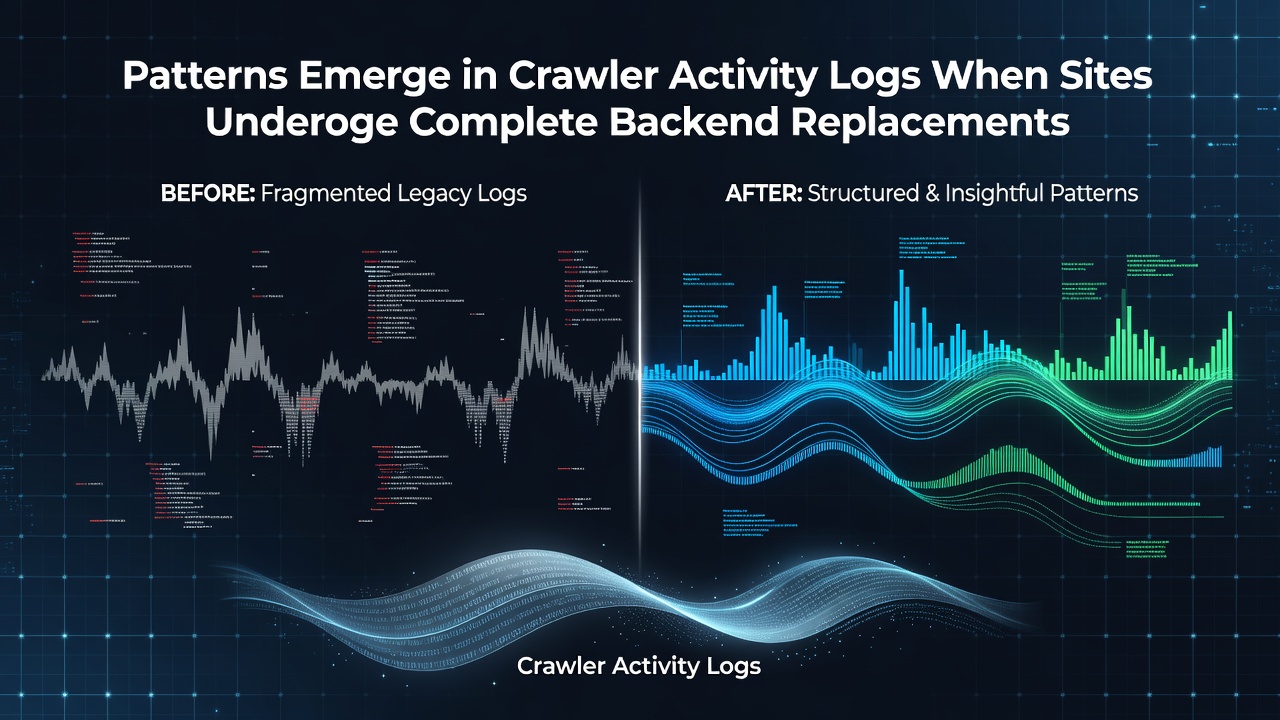
Complete backend replacements trigger distinct sequences in crawler activity logs, and observers note recurring sequences that appear across multiple domains and hosting environments. These shifts often begin with abrupt changes in request volumes, status code distributions, and user-agent behaviors that differ from steady-state operations. Data collected from server logs during such transitions reveals how crawlers respond to new architectures, altered response headers, and modified content delivery paths.
Initial Log Disruptions After Backend Switch
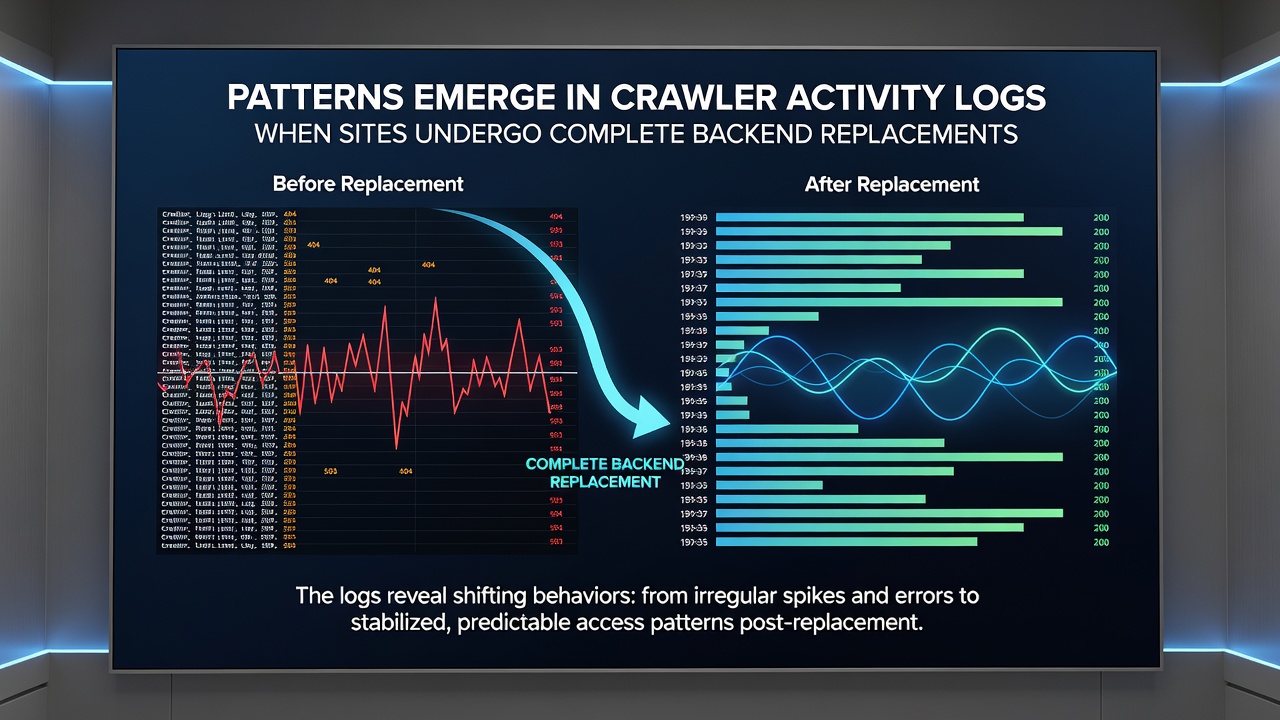
When a site moves to an entirely new backend system, logs typically record an immediate increase in error responses, particularly 404 and 500 codes, as crawlers encounter restructured URLs and unexpected server behaviors. Researchers tracking these events have documented how certain bots reduce their crawl rate temporarily while others maintain or even accelerate requests to re-map the site structure. The patterns become visible within hours of the cutover and persist for days or weeks depending on the scale of the replacement.
Common Sequences in Request Patterns
Analysis of activity logs shows that crawler sessions often cluster around specific time windows after the backend change, with repeated attempts on previously indexed paths followed by exploration of new endpoints. One documented case involved a mid-sized e-commerce platform where logs indicated a 40 percent rise in HEAD requests during the first 72 hours, suggesting verification of content freshness before deeper GET operations resumed. These sequences align with adjustments in how indexing systems interpret site availability and content stability.
By September 2026, monitoring services had compiled enough comparative data to identify consistent markers across different content management systems and custom frameworks. The markers include shifts in the ratio of successful to unsuccessful requests, changes in the diversity of user-agents that appear active, and variations in the depth of directory traversal recorded in access logs. Such indicators help distinguish routine fluctuations from those tied directly to backend transitions.
Adaptation Phases Observed in Crawler Behavior
After the initial disruption phase, logs frequently display a stabilization period where request success rates climb and the distribution of status codes returns toward baseline levels. This adaptation occurs at different speeds depending on how thoroughly the new backend replicates the previous response patterns and header configurations. Sites that preserve existing URL structures and redirect rules experience shorter periods of elevated error rates compared with those that implement more extensive path changes.
Experts examining these logs have also recorded variations in crawl depth and frequency that correlate with the presence of new sitemap files or updated robots.txt directives. When the backend replacement includes revised crawl directives, certain user-agents respond by altering their visitation schedules, while others continue along previously established patterns until they encounter explicit blocks or new permissions. The resulting log entries provide measurable evidence of how indexing systems reconcile legacy signals with updated site instructions.
Comparative Data Across Multiple Implementations
Comparative studies of backend replacement projects indicate that the magnitude of log pattern shifts scales with site size and complexity. Larger domains tend to generate longer sequences of anomalous entries before normalization occurs, whereas smaller sites may show compressed versions of the same progression. According to research compiled by the World Wide Web Consortium, consistent handling of response headers and status codes during architectural changes reduces the duration of these anomalous periods across different crawler populations.
Additional observations from academic sources point to regional differences in how quickly various bots re-establish baseline activity. A report from Canadian network research groups noted that certain regional indexing services adjusted their crawl intervals more rapidly than global counterparts when confronted with identical backend changes. These differences appear in log timestamps and request volume graphs as distinct recovery curves rather than uniform resets.
Technical Markers in Log Files
Technical examination of log files reveals specific markers such as altered referrer strings, modified query parameter handling, and shifts in the order of resource requests that accompany backend replacements. When new server software introduces different compression methods or caching behaviors, crawlers may generate additional conditional requests that did not appear under the previous configuration. These entries stand out when compared against historical log data from the same domain.
Observers note that combining multiple log attributes—timestamp clusters, status code ratios, and user-agent diversity—produces clearer identification of backend-related events than any single metric alone. This multi-attribute approach allows analysts to separate backend-induced patterns from other causes such as content updates or temporary server issues.
Conclusion
Patterns that surface in crawler activity logs during complete backend replacements follow recognizable progressions involving initial disruption, gradual adaptation, and eventual stabilization. The sequences documented across numerous implementations provide measurable indicators that reflect how indexing systems process architectural changes. Continued collection of comparative log data will likely refine the identification of these markers as more organizations complete similar transitions in the coming periods.